Ashwagandha and Male Vitality: What the Clinical Trials Actually Say
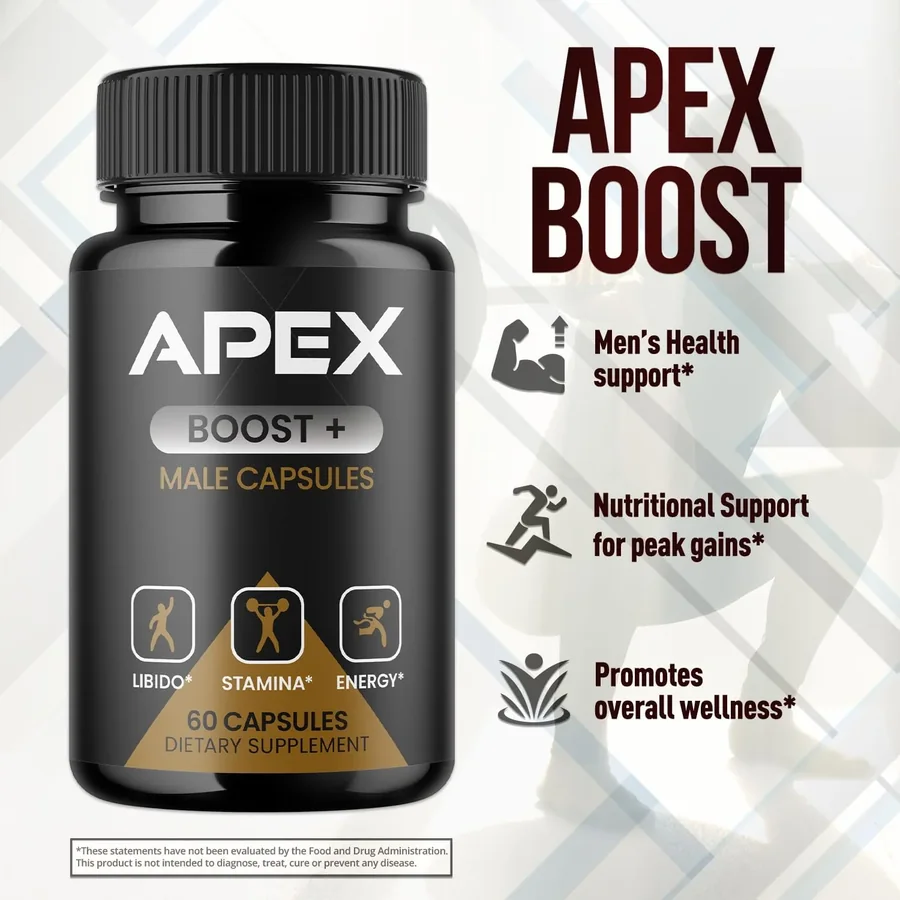
Ashwagandha (Withania somnifera) is fifth of six herbs in Apex Boost's 838 mg Proprietary Male Support Blend. Randomized trials on standardized ashwagandha extracts have reported reduced perceived stress and cortisol, and one small crossover study in aging, overweight men reported changes in self-rated vitality alongside modest hormonal shifts. Every trial used a specific, disclosed extract and dose — information this product's label does not provide for its own share of the blend.
What ashwagandha is
Ashwagandha is the root of Withania somnifera, a shrub used for centuries in Ayurvedic medicine and classified there as a rasayana, or restorative tonic. In modern supplement science it is usually described as an "adaptogen" — a loose, non-regulatory term for a botanical proposed to help the body maintain balance under stress, rather than acting on one specific receptor or pathway. Most of the clinical research on ashwagandha over the past fifteen years has used standardized root extracts, and the findings below are specific to those standardized extracts, not to raw ashwagandha powder or unstandardized preparations in general.
Where it sits on the Apex Boost label
On the Apex Boost Supplement Facts panel, ashwagandha extract (Withania somnifera) is the fifth of six herbs printed inside the 838 mg Proprietary Male Support Blend, after tribulus, horny goat weed, longjack and Panax ginseng, and ahead of only yohimbe. Because FDA rules require proprietary-blend ingredients to be listed in descending order by weight, fifth position tells you ashwagandha is not the largest component of the blend — but, as with every herb in this formula, no individual milligram figure or extract-standardization detail is printed. The label states inactive ingredients (silica dioxide, rice flour, magnesium stearate) but discloses no per-herb dose.
What the stress and cortisol trials found
The best-known modern ashwagandha trial is a 2012 randomized, double-blind, placebo-controlled study published in the Indian Journal of Psychological Medicine. It tested a high-concentration full-spectrum ashwagandha root extract in adults with a history of chronic stress and reported reductions in a standard perceived-stress questionnaire and in serum cortisol compared with placebo over an eight-week period. A more recent 2023 randomized, double-blind, placebo-controlled trial in the Journal of Psychopharmacology tested a different standardized ashwagandha root extract in adults reporting high stress and fatigue, and likewise reported improvements in stress and fatigue measures relative to placebo.
Both studies measured stress and cortisol, not sexual function or muscle performance directly. That distinction matters for how a men's-health product can honestly use this research: it supports a stress-related "wellness" framing more directly than it supports a specific libido or strength claim.
The aging-men vitality and hormone trial
The trial most directly relevant to a men's-vitality product is a 2019 randomized, double-blind, placebo-controlled crossover study in the American Journal of Men's Health, which examined hormonal and self-rated vitality outcomes from a standardized ashwagandha extract in aging, overweight men. This is the study most often cited by men's-health marketing for ashwagandha, and it is worth being precise about what a crossover design in a fairly small, specific population (aging, overweight men) can and cannot establish: it can show a within-group change under controlled conditions, but a small single trial in a narrow population is not the same as a large, confirmed effect across all adult men, and it should be read as one data point supporting further study rather than a settled conclusion.
What this trial doesn't tell you about Apex Boost
The 2019 crossover study used a specific standardized extract at a specific, disclosed daily dose in a defined population. Apex Boost's label discloses neither the extract standardization nor the milligram amount of ashwagandha in its blend, so the trial's results cannot be assumed to transfer to this product at whatever share of 838 mg it actually contains.
Ashwagandha, "testosterone boosters," and what a recent review said
Ashwagandha is frequently paired with fenugreek (Trigonella foenum-graecum) in commercial "testosterone-boosting" supplements, and a 2025 paper in Advances in Clinical and Experimental Medicine specifically examined Withania somnifera and Trigonella foenum-graecum as ingredients in testosterone-boosting supplements and discussed the possible clinical implications of that combination, noting that while some trials report favorable hormonal or performance signals, the overall evidence for a reliable, clinically meaningful testosterone increase from either ingredient alone remains limited and inconsistent across studies. A broader 2026 review in Pharmacological Research analyzing androgen modulation by natural products placed ashwagandha among a wider group of botanicals with preliminary but not yet conclusive human evidence for androgen effects.
The pattern echoes what the tribulus research shows elsewhere in this same blend: individual studies report interesting signals, but the field as a whole has not reached the kind of consistent, replicated, dose-confirmed result that would support an unqualified "raises testosterone" claim for any single botanical at store-shelf doses.
Why stress reduction is a plausible route to vitality claims
One reason ashwagandha keeps appearing in men's-health formulas even though direct hormone data is mixed is a more indirect and, frankly, more defensible mechanism: chronic stress and elevated cortisol are independently associated with reduced libido and general fatigue in the broader endocrinology literature, separate from any single supplement study. If a standardized ashwagandha extract at a clinically tested dose genuinely lowers perceived stress and cortisol — which is the best-supported finding across the trials above — then an improvement in energy or libido could plausibly follow as a downstream effect of stress reduction, rather than from any direct action on testosterone synthesis. That is a more modest and more defensible claim than "boosts testosterone," and it is closer to what the actual trial data shows.
Why the specific extract matters more than the plant name
Every positive ashwagandha trial cited above used a specific, named, standardized commercial extract — not "ashwagandha" as a generic category. Standardization is usually expressed as a percentage of withanolides, the compound class believed to drive much of the root's activity. A label that says only "Ashwagandha Extract (Withania Somnifera)" inside a proprietary blend, as Apex Boost's does, gives you the plant but not the extract standardization or the dose, which are the two variables every cited trial controlled precisely.
| How it's printed | What you know | What you don't |
|---|---|---|
| Named standardized extract (e.g. a stated withanolide %) with a stated mg amount | A dose comparable to specific published trials | Whether it matches your particular goal (stress vs. strength vs. libido trials differ) |
| "Ashwagandha Root Extract," stated mg, no standardization | The weight of extract | Its withanolide content, and therefore its likely potency |
| Inside a proprietary blend, no amount, no standardization (this product) | Only that it's present and roughly where it ranks by weight | Everything that determines whether it resembles a tested dose |
A note on reading supplement trials generally
It's worth spending a moment on how to read any of the trials cited above, not just to build trust in this particular article but because the same reading skills apply to every supplement claim you'll ever encounter. Randomized, double-blind, placebo-controlled design — the kind used in the Chandrasekhar, Smith and Lopresti trials cited here — is the strongest common study design for a supplement claim, because neither participants nor researchers know who received the active extract until after the data is collected, which limits (though never fully eliminates) the placebo effect and researcher bias.
Three questions are worth asking of any such trial before treating its result as settled: How many participants were enrolled, and for how long? Small trials (dozens of participants, weeks not years) can show real short-term effects but cannot rule out that the effect shrinks, or the population studied doesn't represent you. Who funded it? Several ashwagandha trials, including some cited here, were funded in whole or part by extract manufacturers — a fact that does not automatically invalidate a result but is a routine and important thing to check, since industry-funded nutrition trials are more likely on average to report favorable outcomes than independently funded ones. And what was actually measured? A validated stress questionnaire and a serum cortisol test are objective, reproducible measures; a self-rated "vitality" score, used in the aging-men crossover trial above, is a real and useful measure but a softer one, more prone to expectation effects than a blood test.
None of that means the ashwagandha research is untrustworthy — several of the trials cited are well-designed, peer-reviewed, and published in reputable journals. It means the honest way to use this research is as evidence that a specific, standardized extract at a specific dose produced a specific, measured effect in a specific group of people — not as a blanket guarantee that any product containing the word "ashwagandha" will do the same thing for you.
Safety and who should be cautious
Ashwagandha is generally reported as well tolerated in the randomized trials above, with mild gastrointestinal symptoms and drowsiness among the more commonly noted effects. It is not associated with the cardiovascular cautions specific to yohimbe elsewhere in this blend. Ashwagandha is in the nightshade family and has thyroid-stimulating effects reported in some case literature, so people with thyroid conditions, autoimmune conditions, or who are on sedative or thyroid medication should discuss it with a clinician before use — which is consistent with Apex Boost's own printed caution to consult a physician before taking this or any dietary supplement, particularly for anyone managing a diagnosed medical condition. Pregnant or nursing women and anyone under 18 should not take this or any product containing ashwagandha, consistent with the caution printed on this product's own label for the blend as a whole.
Because ashwagandha is combined here with five other botanicals, including yohimbe, any side effect you notice after starting the product cannot be attributed to ashwagandha specifically without stopping and reintroducing ingredients one at a time under medical guidance — a proprietary blend makes that kind of troubleshooting harder than a single-ingredient product would.
A short checklist for reading any ashwagandha label
- Look for a named, branded extract or a withanolide percentage. "Ashwagandha" alone tells you the plant, not the strength.
- Match the claim to the evidence type. Stress and cortisol have the strongest trial support; direct testosterone or libido claims have thinner, more mixed support.
- Check whether the dose is inside an undisclosed blend. If so, no published trial dose can be assumed to apply.
- Ask what "vitality" means in the cited study. Self-rated questionnaires are not the same as measured physical performance.
- If you have a thyroid or autoimmune condition, ask a clinician first, regardless of how the product is marketed.
See how ashwagandha fits the full blend. All six ingredients, their printed order and what the label does and doesn't disclose are broken down on the product page.
See the ingredient breakdownBottom line
Standardized ashwagandha extracts have some of the better-supported clinical trial evidence of any botanical in this category, particularly for perceived stress and cortisol, with a smaller and more preliminary body of evidence on vitality and hormone measures specifically in men. Every one of those results comes from a specific extract at a specific, disclosed dose. Apex Boost's label puts ashwagandha fifth in an 838 mg blend without disclosing which extract or how much of it is present, so the research above should inform how you think about the ingredient generally — not be read as a guarantee of what this particular bottle delivers.
Keep reading
References
- Chandrasekhar K, Kapoor J, Anishetty S. A prospective, randomized double-blind, placebo-controlled study of safety and efficacy of a high-concentration full-spectrum extract of ashwagandha root in reducing stress and anxiety in adults. Indian J Psychol Med. 2012;34(3):255-262. PMID: 23439798.
- Smith SJ, Lopresti AL, Fairchild TJ. Exploring the efficacy and safety of a novel standardized ashwagandha (Withania somnifera) root extract in adults experiencing high stress and fatigue in a randomized, double-blind, placebo-controlled trial. J Psychopharmacol. 2023;37(11):1091-1104. PMID: 37740662.
- Lopresti AL, Drummond PD, Smith SJ. A Randomized, Double-Blind, Placebo-Controlled, Crossover Study Examining the Hormonal and Vitality Effects of Ashwagandha (Withania somnifera) in Aging, Overweight Males. Am J Mens Health. 2019;13(2):1557988319835985. PMID: 30854916.
- Skrzypiec-Spring M, et al. Withania somnifera and Trigonella foenum-graecum as ingredients of testosterone-boosting supplements: Possible clinical implications. Adv Clin Exp Med. 2025;34(2). PMID: 38628109.
- Sharma K, et al. Analysis of androgen modulation by natural products. Pharmacol Res. 2026 Sep. PMID: 42575271.