Ginseng Root Extract (Panax Ginseng): What the Trials Actually Found
The fourth of six herbs on the Apex Boost label, read against a 2021 Cochrane review, two earlier trials, and what a 2023 review of marketed ED supplements found.
Written by the Theapexboost Editorial Desk Medically reviewed by Dr. Justin Houman, MD Published
What the label says about ginseng
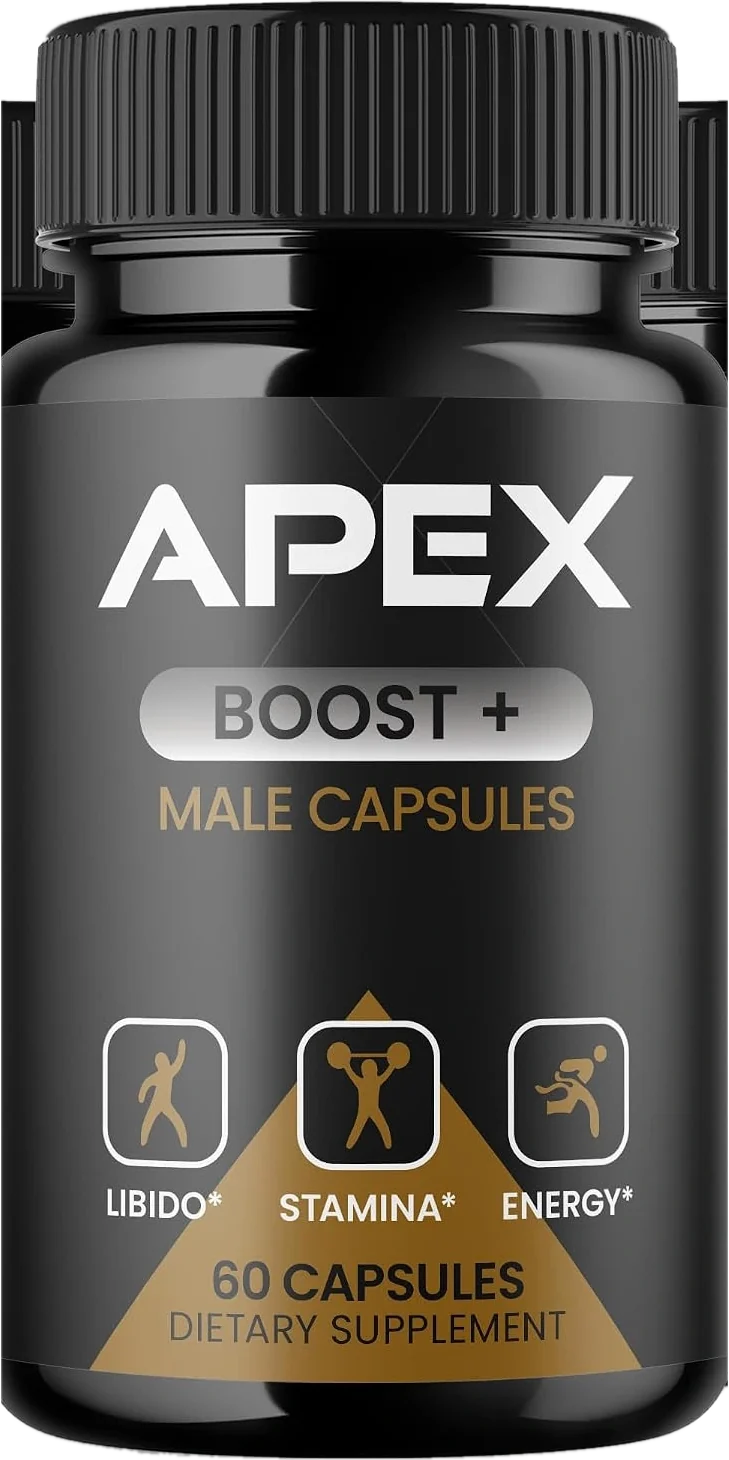
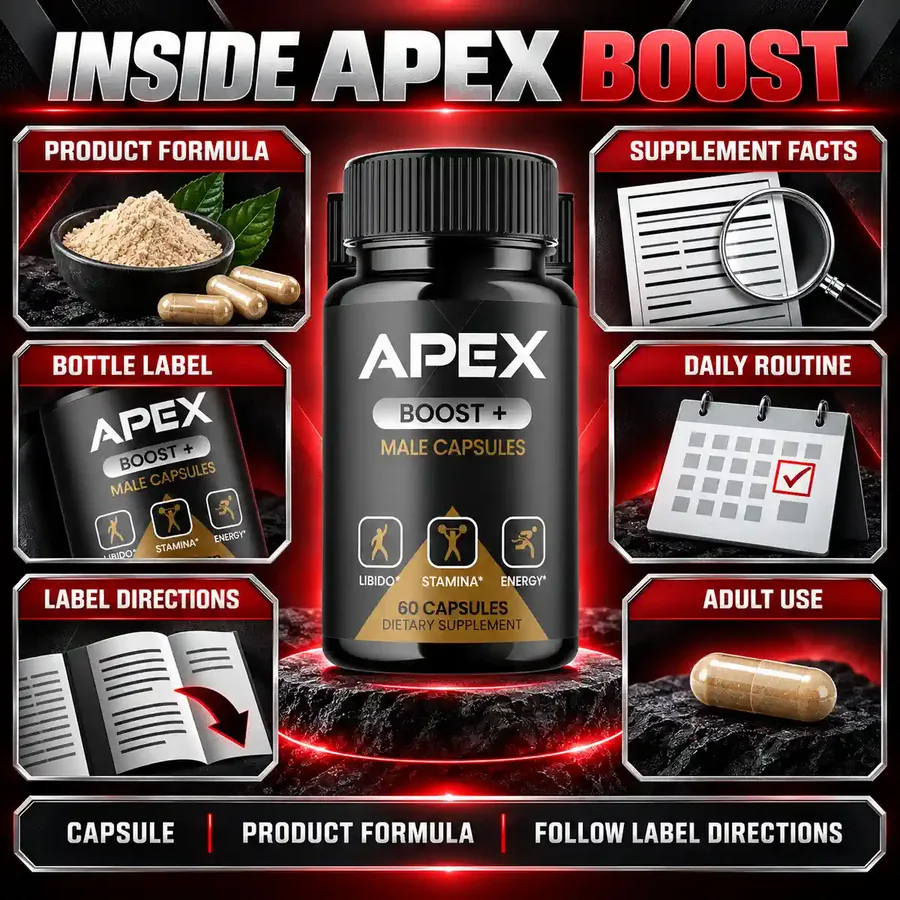
Apex Boost’s Supplement Facts panel lists “Ginseng Root Extract (Panax Ginseng)” as the fourth of six herbs inside the 838 mg Proprietary Male Support Blend, in this printed order: Tribulus Terrestris, Horny Goat Weed (Epimedium Sagittatum), Longjack (Eurycoma Longifolia), Ginseng Root (Panax Ginseng), Ashwagandha (Withania Somnifera), Yohimbe (Pausinystalia Yohimbe). As with every herb in this blend, the label prints one total — 838 mg for all six combined — and no individual milligram amount for ginseng on its own. That is a proprietary blend, and under U.S. labeling rules a manufacturer is allowed to disclose the total weight of a blend without breaking out each ingredient inside it. We cover what that does and doesn’t tell a buyer later in this post.
Panax ginseng, sometimes called Asian or Korean ginseng, is one of the most heavily researched botanicals sold as a supplement anywhere in the world. That research base is exactly why it is worth a dedicated post: there is enough of it, including systematic reviews and a Cochrane review, to say something more specific than “ginseng is traditionally used for energy.”
One honest limit applies to everything below. Every study we cite tested ginseng, or a ginseng extract, on its own or against a placebo. None tested Apex Boost as a finished product, and no study anywhere has tested this specific six-herb, 838 mg blend. That is the same rule this site states on its sources and review page, and it applies here in full.
The highest-quality evidence: a 2021 Cochrane review
The most rigorous answer available on ginseng and erectile function is a 2021 Cochrane systematic review by Lee and colleagues, which pooled nine randomized trials covering 587 men with mild to moderate erectile dysfunction, aged 20 to 70 (Lee 2021, PMID 33871063). Cochrane reviews are built to the strictest bar in evidence medicine, and this one graded most of the included evidence as low certainty — worth knowing before the numbers below.
Using the 15-item International Index of Erectile Function (IIEF-15), the review found ginseng produced a trivial average improvement over placebo (mean difference of 3.52 points on a scale that runs far wider than that). Using the shorter IIEF-5 screening tool, the effect was also trivial (mean difference of 2.39 points), and the review’s authors described that finding as “probably” trivial given the certainty of the evidence behind it. Where ginseng looked more useful was a softer, self-reported measure: men taking ginseng were about 2.55 times more likely to report an improved ability to have intercourse than men taking placebo. Adverse events were little different between ginseng and placebo groups.
What the review’s authors actually concluded
“Based on mostly low certainty evidence, ginseng may only have trivial effects on erectile function or satisfaction with intercourse compared to placebo,” while it “may improve men’s self-reported ability to have intercourse” with little difference in adverse events. The review also notes a real gap: no trial has compared ginseng head-to-head against phosphodiesterase-5 (PDE5) inhibitors, the prescription drug class with the strongest evidence for erectile dysfunction.
That combination — trivial change on the validated symptom scores, a real but modest signal on self-reported ability, low certainty throughout — is the single most reliable summary of what ginseng does for erectile function. It is not nothing, and it is not what a “Libido*” icon on a bottle implies either.
Two earlier trials, and why the picture shifted
Two older, smaller studies explain why ginseng built its reputation in this category before the 2021 Cochrane review tempered it.
A 2007 trial by de Andrade and colleagues gave Korean Red Ginseng to men with erectile dysfunction and tracked their IIEF-5 scores before and after treatment (de Andrade 2007, PMID 16855773). Scores rose from an average of 16.4 to 21.0 (standard deviations 2.9 and 6.3), a statistically significant change (P < 0.0001). The trial’s own conclusion was that “KRG can be an effective alternative to the invasive approaches for treating male ED” — a confident claim for a single mid-sized trial, and one later reviews have treated more cautiously.
A year earlier, in 2008, Jang and colleagues published a systematic review of red ginseng for erectile dysfunction in the British Journal of Clinical Pharmacology (Jang 2008, PMID 18754850). It found seven eligible randomized trials, six of them placebo-controlled with 349 total participants, and the pooled result favored ginseng clearly: a risk ratio of 2.40 for improvement (95% CI 1.65–3.51, P < 0.00001). But the review’s authors flagged their own evidence base honestly: “their methodological quality was low on average,” and their conclusion was that the trials provided “suggestive evidence” while “the total number of RCTs included in the analysis, the total sample size and the methodological quality of the primary studies were too low to draw definitive conclusions.”
Put the three together and a pattern appears. The 2008 review, working from smaller and lower-quality trials, found a strong-looking responder-rate effect and said plainly that it wasn’t strong enough evidence to be definitive. The 2021 Cochrane review, built on a larger and more carefully vetted set of trials thirteen years later, confirmed a real but trivial effect on validated scores and a more modest, though still positive, self-reported effect. That is normal for how supplement research matures — early small trials often look better than the field does once more and stronger trials accumulate — and it is also why this post leans on the 2021 Cochrane review as the headline answer rather than the more dramatic 2007 single-trial number.
Ginseng and fatigue: a separate research question
Apex Boost’s front label also carries an “Energy*” claim, which is a different research question from erectile function. A 2023 systematic review and meta-analysis by Li and colleagues pooled 19 randomized trials of ginseng for fatigue (Li 2023, PMID 36730693). Across all 19 trials combined, ginseng did not produce a statistically significant overall reduction in fatigue compared with control. A subgroup that did better was “ginseng herbal formula” products — multi-ingredient combinations rather than ginseng alone — which showed a significant improvement (P = 0.004), most clearly in people with chronic fatigue (P = 0.03). The review’s own conclusion: “Ginseng herbal formulas improved fatigue severity compared to controls, especially among patients with CF, but with a small effect size,” and the authors called for more rigorous trials and standardized usage guidelines before drawing firmer conclusions.
Two honest caveats apply directly to Apex Boost. First, the positive subgroup in that review was a different set of ginseng-containing formulas studied for diagnosed fatigue conditions, not this product, and not healthy men using a supplement for general daily energy. Second, where the review found a signal it was explicit that the effect size was small. Neither of those caveats makes the research irrelevant — it’s the closest available evidence to the “Energy*” claim on this label — but neither supports a stronger claim than the label itself makes with its asterisk.
What a 2023 review of ED supplements found
A separate, broader 2023 systematic review and meta-analysis by Petre and colleagues looked specifically at marketed dietary supplement products for erectile dysfunction — the exact commercial category Apex Boost sits in (Petre 2023, PMID 37686709). Two findings from it are directly useful here. First, a structural one: the review observes that dietary supplements in this category “are usually blends of many substances that are frequently employed at a negligible dose or without any evidence,” and that the combination of ingredients in many marketed products “leaves doubts about the real effectiveness” once you consider dosing relative to the amounts used in clinical trials. Across the products it analyzed, the review found roughly 80% showed no expected efficacy by its criteria, and only about 8% met its higher efficacy bar.
Second, and more specific: among every ingredient this review surveyed across the marketed-supplement landscape, it named only three with supportive evidence — Panax ginseng, Tribulus terrestris, and L-arginine. Two of those three — ginseng and tribulus — are on this label. That is a genuinely favorable data point for this blend relative to the category it competes in, and we think it deserves to be stated plainly rather than buried. It does not, however, resolve the dosing question the same review raises: supportive evidence for an ingredient in general is not the same as evidence that an unstated share of an 838 mg six-herb blend delivers an effective amount of it.
Why “Ginseng Root Extract” isn’t the same as a trial’s ginseng
Every trial discussed above used a specific, named ginseng preparation — most commonly Korean Red Ginseng, a steamed-and-dried extract standardized in various ways across manufacturers, dosed on its own at several grams a day in many of the trials. Apex Boost’s label prints a single line, “Ginseng Root Extract (Panax Ginseng),” inside an 838 mg blend shared with five other herbs. The label does not state:
- How many of the 838 mg belong to ginseng specifically
- Whether the extract is standardized to a particular ginsenoside percentage
- Whether it is processed as red (steamed) ginseng, white (dried) ginseng, or another form
None of that is a defect unique to this product — it is standard for a proprietary blend, and this site’s own sources and review page states the same rule for every herb on this label: the page won’t estimate what the label doesn’t print. The practical takeaway for a reader comparing bottles is this: a product that states a specific milligram amount and extract standardization for its ginseng is giving you more information to compare against the trial literature than a product, including this one, that states only a blend total.
Who should ask a doctor first
Ginseng is generally considered to carry a milder interaction profile than yohimbe, the last herb on this same label, but it is not risk-free for everyone. People on blood-thinning medication, people with diabetes who use glucose-lowering medication, and people with hormone-sensitive conditions are the groups most often flagged in the research above and in U.S. health-agency guidance as needing a doctor’s input before adding a ginseng-containing supplement. Because Apex Boost combines ginseng with five other active herbs — including yohimbe, which this site covers in detail in a separate post on that caution — anyone taking prescription medicine of any kind, or managing a heart, blood-pressure, or hormone condition, should read the whole label and talk to a clinician before starting, exactly as the about page and disclaimer on this site already say.
Sources
- Lee HW, Lee MS, Kim TH, Alraek T, Zaslawski C, Kim JW, Moon DG. Ginseng for erectile dysfunction. Cochrane Database Syst Rev. 2021;4(4):CD012654. PMID: 33871063.
- de Andrade E, de Mesquita AA, Claro JA, de Andrade PM, Ortiz V, Paranhos M, Srougi M. Study of the efficacy of Korean Red Ginseng in the treatment of erectile dysfunction. Asian J Androl. 2007;9(2):241–244. PMID: 16855773.
- Jang DJ, Lee MS, Shin BC, Lee YC, Ernst E. Red ginseng for treating erectile dysfunction: a systematic review. Br J Clin Pharmacol. 2008;66(4):444–450. PMID: 18754850.
- Li X, Yang M, Zhang YL, Hou YN, Smith CM, Korenstein D, Mao JJ. Ginseng and Ginseng Herbal Formulas for Symptomatic Management of Fatigue: A Systematic Review and Meta-Analysis. J Integr Complement Med. 2023;29(8):468–482. PMID: 36730693.
- Petre GC, Francini-Pesenti F, Vitagliano A, Grande G, Ferlin A, Garolla A. Dietary Supplements for Erectile Dysfunction: Analysis of Marketed Products, Systematic Review, Meta-Analysis and Rational Use. Nutrients. 2023;15(17):3677. PMID: 37686709.
- Moyad MA. Nutraceuticals and Phytotherapy in Men’s Health: Antioxidants, Pro-oxidants, and a Novel Opportunity for Lifestyle Changes. Urol Clin North Am. 2022;49(2):239–248. PMID: 35428430.
Who reviewed this post
Dr. Justin Houman, MD Physician · medical reviewer for theapexboost.com
Dr. Justin Houman, MD is the physician named as medical reviewer for this site. He checks this kind of post for accuracy against the sources cited below and for safety wording, before it is published and again if it changes. The review is not an endorsement of Apex Boost and not personal medical advice — questions about your own health belong with your own doctor.