Horny Goat Weed (Epimedium Sagittatum): What Icariin Research Actually Shows
The second of six herbs on the Apex Boost label, read against the actual icariin research: a species-matched cell study, two hypertensive-rat studies, and two honest reviews.
Written by the Theapexboost Editorial Desk Medically reviewed by Dr. Justin Houman, MD Published
What the label says: Epimedium sagittatum
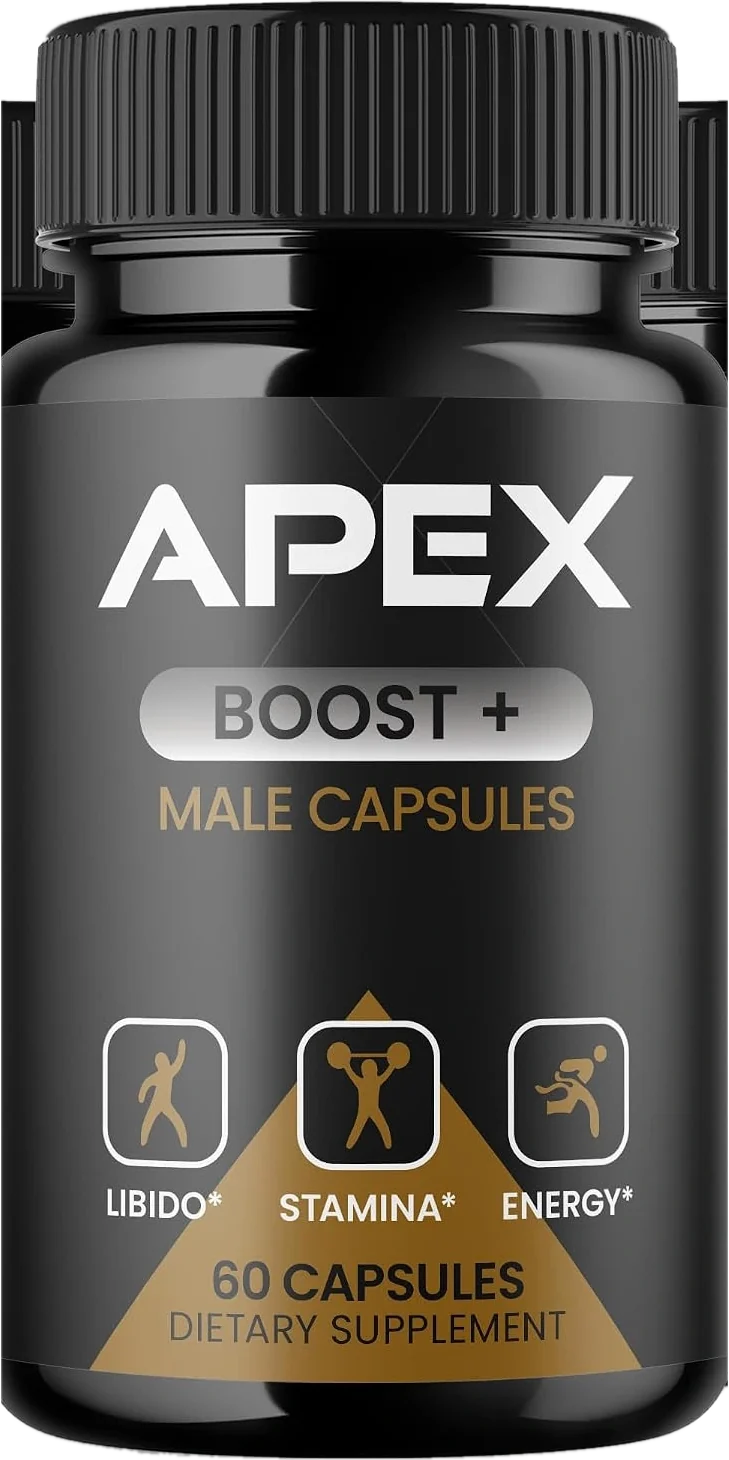
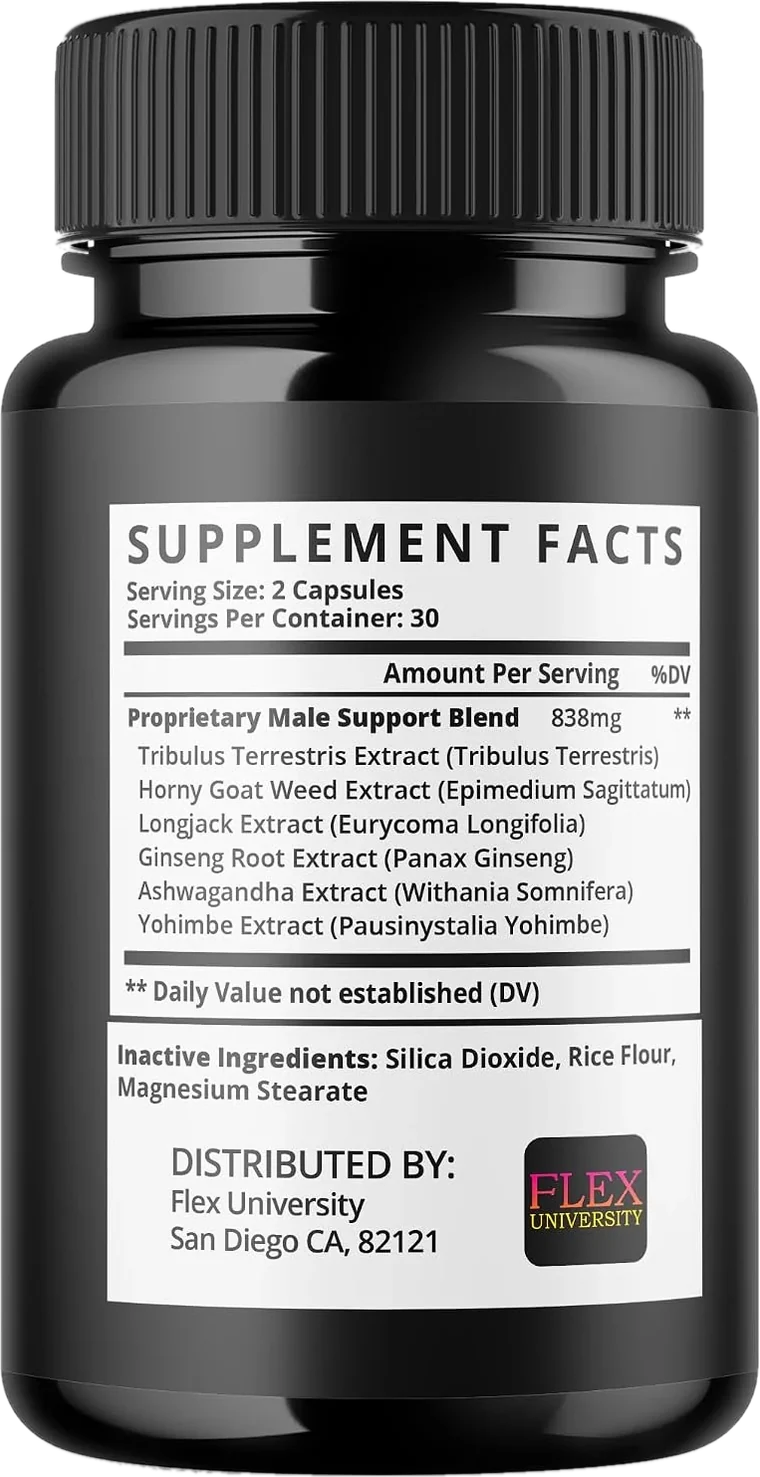
Apex Boost’s Supplement Facts panel lists “Horny Goat Weed Extract (Epimedium Sagittatum)” as the second of six herbs inside the 838 mg Proprietary Male Support Blend, printed in this order: Tribulus Terrestris, Horny Goat Weed (Epimedium Sagittatum), Longjack (Eurycoma Longifolia), Ginseng Root (Panax Ginseng), Ashwagandha (Withania Somnifera), Yohimbe (Pausinystalia Yohimbe). As with the rest of the blend, the label prints the 838 mg total and does not break out a milligram amount for horny goat weed on its own — a standard feature of a proprietary blend, not something specific to this product, and a limit this site repeats on every ingredient post rather than guessing around it.
“Horny goat weed” is the common name for several related Epimedium species used in traditional Chinese practice; Epimedium sagittatum, the exact species printed on this label, is one of the more studied ones in laboratory research. That species match matters, because this post sticks to research that named Epimedium sagittatum or its marker compound, icariin, specifically, rather than the genus in general.
The honest limit that applies to every post in this series applies here too: every source below tested a compound, a cell line, or an animal model — never Apex Boost as a finished product, and never this specific six-herb blend. That is the rule stated on this site’s own sources and review page, and nothing in this post gets a pass from it.
Icariin, the compound behind the traditional name
Most modern research on horny goat weed is really research on icariin, a flavonoid compound Epimedium plants produce naturally, along with related compounds such as baohuoside I and icariside II. Researchers are interested in icariin because, in laboratory settings, it behaves somewhat like the mechanism class that includes prescription PDE5 inhibitors (the drug class that includes sildenafil) — which is exactly why the traditional name attached to this plant persists in modern marketing. Whether that laboratory behavior holds up in a human body taking a capsule is the question the rest of this post works through.
What a 2022 study actually tested — cells, not people
The most directly relevant study for this label is a 2022 paper in Chinese Medicine by Li and colleagues, which isolated flavonoid compounds specifically from Epimedium sagittatum — the exact species this label prints — and tested them as PDE5A inhibitors (Li 2022, PMID 36587222). It is worth being precise about what that study actually did, because the method matters as much as the result.
What this study actually measured
Researchers isolated eight flavonoid compounds from Epimedium sagittatum, screened them with HPLC, and ran a 3D-QSAR (quantitative structure-activity relationship) computational model alongside testing on rat corpus cavernosum smooth muscle cells in a lab dish. Icariin itself inhibited the PDE5A enzyme with an IC50 of 8.275 µM; two related compounds, 2-O’rhamnosylicaridide II and baohuoside I, were more potent in this assay, at IC50s of 3.233 and 5.473 µM. In the rat cell line, the active compounds raised cGMP and lowered calcium inside the cells by activating an enzyme called PKG — the same general signaling pathway PDE5 inhibitor drugs work through.
That is a real, specific, species-matched finding, and it is also entirely a cell-and-computer study. No animal swallowed anything, and no person was involved. An IC50 measured in a lab dish describes how a purified, isolated compound behaves against one enzyme in a controlled setting — it does not establish what dose of a crude plant extract, swallowed as part of a six-herb capsule, would need to deliver, or whether it would reach the relevant tissue at an effective concentration after digestion. That gap between a bench finding and a dosing recommendation is one of the most common places supplement marketing overstates what research actually shows, and it is why this post treats the finding as real but preliminary rather than as proof the ingredient works as a capsule.
The animal evidence: hypertensive rats, not men
Two studies by Liu, Long and colleagues move one step further than cells, into live animals — specifically spontaneously hypertensive rats (SHR), a standard lab model for studying erectile function alongside cardiovascular disease, compared against normal Wistar-Kyoto (WKY) rats (Liu 2021, PMID 33507631; Long 2018, PMID 29968380). In the 2021 study, rats treated with icariin showed a significantly higher ICPmax/MAP ratio (a standard measure of erectile response to electrical nerve stimulation) than untreated hypertensive rats, along with higher nitric oxide and cGMP levels in penile tissue. The proposed mechanism involved icariin promoting a helpful interaction between an enzyme called eNOS and a chaperone protein (HSP90), while reducing an interaction that normally suppresses eNOS activity. The earlier 2018 study found a related result: icariin improved erectile function in the same rat model by reducing a process called eNOS “uncoupling.”
These are legitimate, mechanistically detailed animal studies, and they are a meaningful step past a lab dish — a whole circulatory system and a whole nervous system are involved, not just isolated cells. But a hypertensive rat is not a human clinical trial, rat dosing and absorption don’t map directly onto a human capsule dose, and erectile physiology in rodents, while a recognized research model, is not identical to human erectile physiology. Nothing in either study tells a reader what happens when a man takes two capsules of an 838 mg blend that includes an unstated amount of horny goat weed extract.
What a 2022 review called “the myth of icariin”
A 2022 narrative review in Translational Andrology and Urology, by Niu and colleagues, surveyed the broader icariin research base under a pointed title: “Deciphering the myth of icariin and synthetic derivatives in improving erectile function” (Niu 2022, PMID 35958901). The review confirms the mechanism picture described above — that icariin and some of its derivatives show specific PDE5 inhibition and may promote testosterone synthesis, working partly by activating processes that support blood vessel and smooth-muscle repair in penile tissue. Its own conclusion, stated plainly, is that “more clinical and basic researches with high quality and large samples are recommended” — a researcher’s way of saying the human clinical evidence has not caught up to the laboratory mechanism work, two years after that paper’s own publication and counting.
Put together with a broader 2021 review of plant-derived PDE5 inhibitor candidates, the shape of the icariin evidence base is consistent across every independent source we checked: promising, mechanistically specific, laboratory-and-animal-stage research, without the large randomized human trials that would be needed to know whether it changes anything for a man taking a capsule.
A wider lens: 97 plants, the same preclinical stage
Icariin isn’t an isolated case, and that context is worth having. A 2021 review in the Journal of Ethnopharmacology catalogued medicinal plants studied as possible PDE5 inhibitors across the entire research literature, not just Epimedium (Anand Ganapathy 2021, PMID 33137431). It found 97 medicinal plants showing a PDE5-inhibitory effect, “supported by preclinical experimental evidence,” and traced that activity to specific compound classes — sixteen alkaloids, sixty-one phenolics (the chemical family icariin belongs to), and eight polycyclic aromatic hydrocarbons. The review’s own framing is that this entire 97-plant field needs “systemic evaluation and further development before clinical applications can be established.” In other words: icariin sits inside a large, active, legitimately promising area of botanical research that is, as a field, still waiting on the human trials that would move any one plant from preclinical candidate to proven supplement ingredient.
A 2026 overview, and the same honest gap
The most recent source we found makes the same point even more directly. A 2026 overview of Epimedium phytochemistry and therapeutic potential, covering five species of the genus including Epimedium sagittatum, states it without hedging: “Although preclinical findings are increasingly compelling, robust clinical evidence is still lacking for all five species” (Friș 2026, PMID 42514482). The review’s own recommendation is that “standardized methodologies and rigorous clinical trials are essential to translate this potential into validated therapeutic applications.” As of this post’s publication date, those clinical trials are still the missing piece.
Where the “horny goat weed” name comes from
The common English name is old, not a modern marketing invention. The traditional account, repeated across herbal-medicine writing for centuries, describes a goat herder in China noticing that goats grazing on Epimedium leaves became more sexually active, and giving the plant its common name on that basis. It’s a folk anecdote rather than a study, and nothing in this post treats it as evidence — but it explains why a plant whose modern research is still at the cell-and-rat stage already arrived with centuries of reputation attached, which is exactly the gap this post is trying to make visible: a strong traditional name is not the same thing as a strong modern evidence base, and the two are easy to blur together in marketing copy.
Why this matters for a blend you take, not a dish you read about
None of the research above is a reason to call horny goat weed useless — cell and animal research is a normal, necessary early stage, and icariin’s mechanism is more specific and better characterized than most botanical ingredients get. But there is a real difference between “a compound found in this plant inhibits an enzyme in a lab dish, and improves a blood-flow measurement in hypertensive rats” and “this capsule will do the same thing in you.” Apex Boost’s own label doesn’t claim the second thing — its printed claims are Libido, Stamina and Energy, with an asterisk, and this site’s claims policy holds every page here to that same ceiling. This post exists so a reader who searches for the ingredient can see the actual shape of the evidence rather than a marketing paraphrase of it.
Who should ask a doctor first
Horny goat weed research so far has not raised the same specific, printed caution that yohimbe carries on this same label — a topic this site covers in a dedicated post. Still, anyone taking blood-pressure medication, anyone on a blood thinner, and anyone managing a cardiovascular condition should mention every ingredient in a multi-herb blend like this one to their doctor before starting, precisely because the strongest animal evidence above involves hypertensive subjects and blood-flow mechanisms that can interact with cardiovascular medicine. The practical rule from this site’s about page stands here too: read the whole label, and ask first if you take anything daily.
Sources
- Li J, Wu Y, Yu X, Zheng X, Xian J, Li S, Shi W, Tang Y, Chen ZS, Liu G, Yao S, Xu J, Zheng X. Isolation, bioassay and 3D-QSAR analysis of 8-isopentenyl flavonoids from Epimedium sagittatum maxim. as PDE5A inhibitors. Chin Med. 2022;17(1):147. PMID: 36587222.
- Liu QW, Yang ZH, Jiang J, Jiang R. Icariin modulates eNOS activity via effect on post-translational protein-protein interactions to improve erectile function of spontaneously hypertensive rats. Andrology. 2021;9(1):342–351. PMID: 33507631.
- Long H, Jiang J, Xia J, Jiang R. Icariin improves SHR erectile function via inhibiting eNOS uncoupling. Andrologia. 2018;50(9):e13084. PMID: 29968380.
- Niu Y, Lin G, Pan J, Liu J, Xu Y, Cai Q, Wang T, Luan Y, Chen Y, Feng Y, Yang X, Tian W, Bae WJ, Guan R, Xin Z. Deciphering the myth of icariin and synthetic derivatives in improving erectile function from a molecular biology perspective: a narrative review. Transl Androl Urol. 2022;11(7):1007–1022. PMID: 35958901.
- Friș AS, Lazarova I, Georgieva M, Stana LG, Folescu R, Magyari-Pavel IZ, Munteanu M, Danciu C. An Overview of the Phytochemistry, Biological Activities and Therapeutic Potential of Epimedium spp. Plants (Basel). 2026;15(14). PMID: 42514482.
- Anand Ganapathy AA, Hari Priya VM, Kumaran A. Medicinal plants as a potential source of Phosphodiesterase-5 inhibitors: A review. J Ethnopharmacol. 2021;267:113536. PMID: 33137431.
Who reviewed this post
Dr. Justin Houman, MD Physician · medical reviewer for theapexboost.com
Dr. Justin Houman, MD is the physician named as medical reviewer for this site. He checks this kind of post for accuracy against the sources cited below and for safety wording, before it is published and again if it changes. The review is not an endorsement of Apex Boost and not personal medical advice — questions about your own health belong with your own doctor.